The Travis estate and the Rockledge winter mansions, 1890s-1920s
Wealthy Northerners built winter residences on the Rockledge bluff between the 1890s and the 1925 land boom. The Travis estate, the Williams house, the Magruder-Whaley house, and the lost mansions that came down in the mid-20th century.
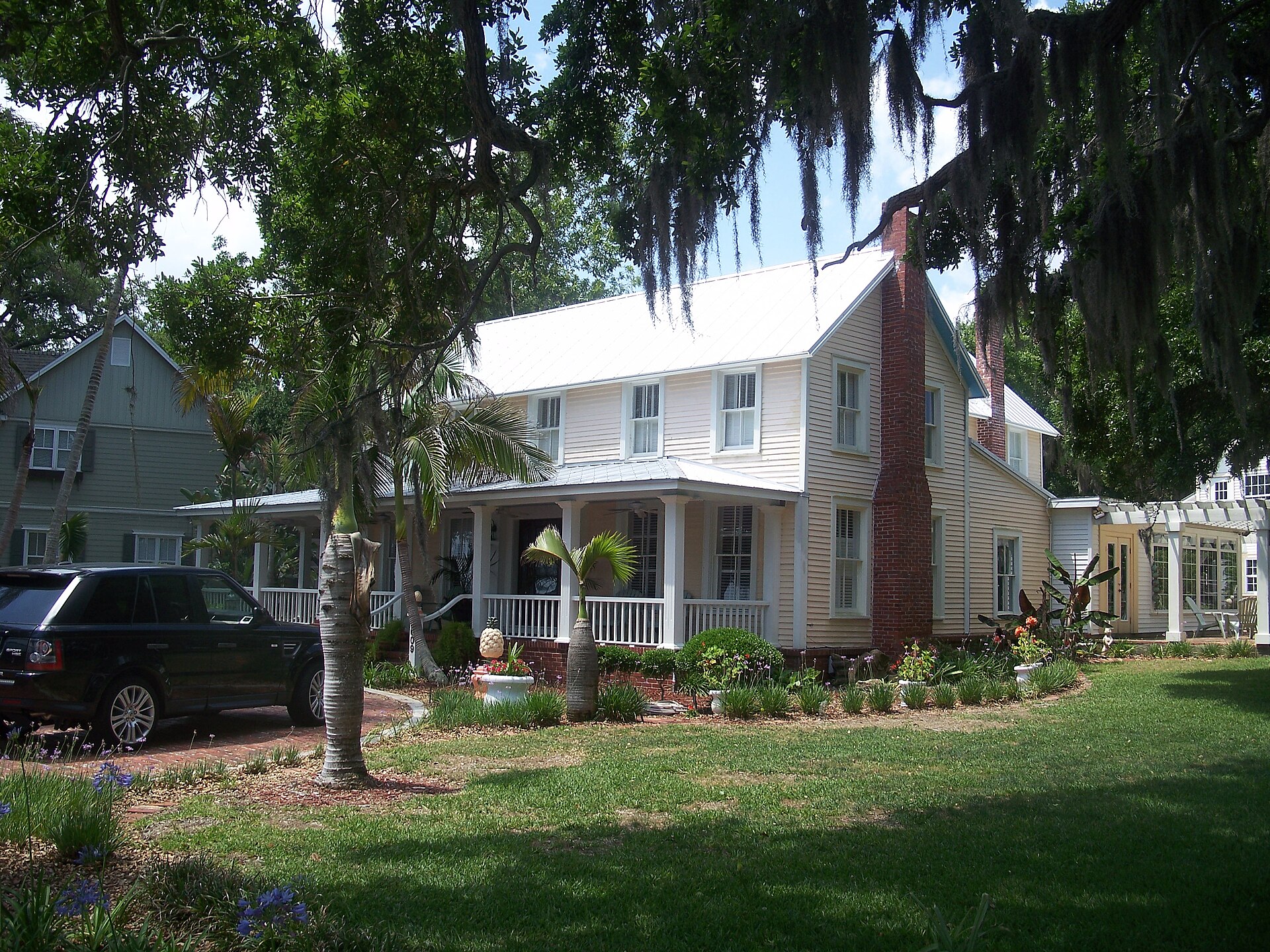
Between the 1890s and the 1920s, wealthy Northerners built winter residences on the Rockledge coquina bluff. Indiana, Ohio, Pennsylvania, New York: the construction-record property cards held by the Brevard County Property Appraiser show owners from each state. Most of the houses were two- and three-story frame structures with deep porches, separate kitchens, and private docks on the river. Most have been demolished. A few are still standing in the Rockledge Drive Residential Historic District.
The pattern
Wealthy Gilded-Age Americans wintered in warm climates. Florida, Italy, the French Riviera, southern California: each had its enclaves. Within Florida, the Atlantic coast was favored over the Gulf coast for proximity to Northeastern rail connections. Within the Atlantic coast, four enclaves emerged before 1900: St. Augustine (Henry Flagler’s Ponce de Leon and surrounding mansions), Daytona, Rockledge, and (after 1894) Palm Beach. Each had a destination hotel and surrounding private residences. Rockledge was the middle option: less grand than St. Augustine or Palm Beach, less developed than Daytona, more affordable than either of the Flagler centers.
The Travis estate
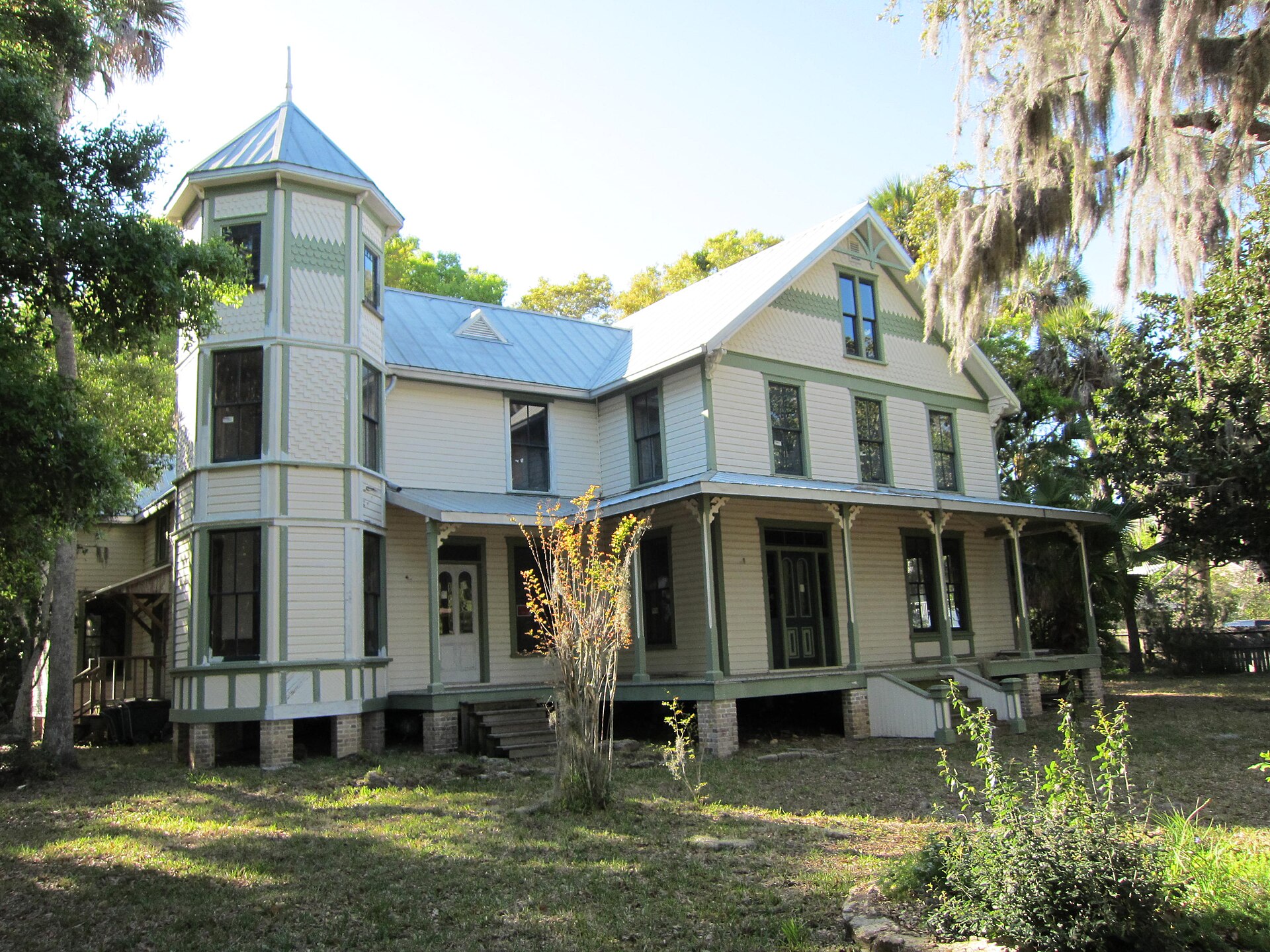
The Travis family arrived in Rockledge from Indiana in the late 1890s. The patriarch, Edwin Travis, was a businessman; the family also held substantial property in Indiana. They acquired a large lot on Rockledge Drive south of the principal hotel district and built a winter residence. The main house, completed around 1900, had elements of Queen Anne and Colonial Revival architecture. Outbuildings included a separate kitchen, a carriage house, and a small dock pavilion.
Period photographs of the Travis estate are in the Florida Memory Project’s Brevard County file. The house had a wraparound porch on three sides, classical columns on the front portico, and a corner turret. The grounds included formal plantings and a citrus grove behind the house. The family wintered in Rockledge through the 1920s.
The estate passed out of the Travis family in the mid-20th century. The main house was modified extensively over the following decades. Whether the current structure on the parcel is the original Travis house with modifications, or a replacement built on the same footprint, is unclear from the standard sources. The NRHP nomination form lists the parcel as contributing.
The Williams house
Henry S. Williams was one of the four aldermen named in the 1887 incorporation charter. He was a year-round Rockledge resident and a major property owner, not a winter visitor, but his house exemplifies the same architectural vocabulary as the winter mansions: Queen Anne, prominent corner tower, deep porches, river frontage with a private dock. The H. S. Williams House, circa 1890, is still standing on Rockledge Drive and is one of the most prominent contributing structures in the historic district.
The Magruder-Whaley House
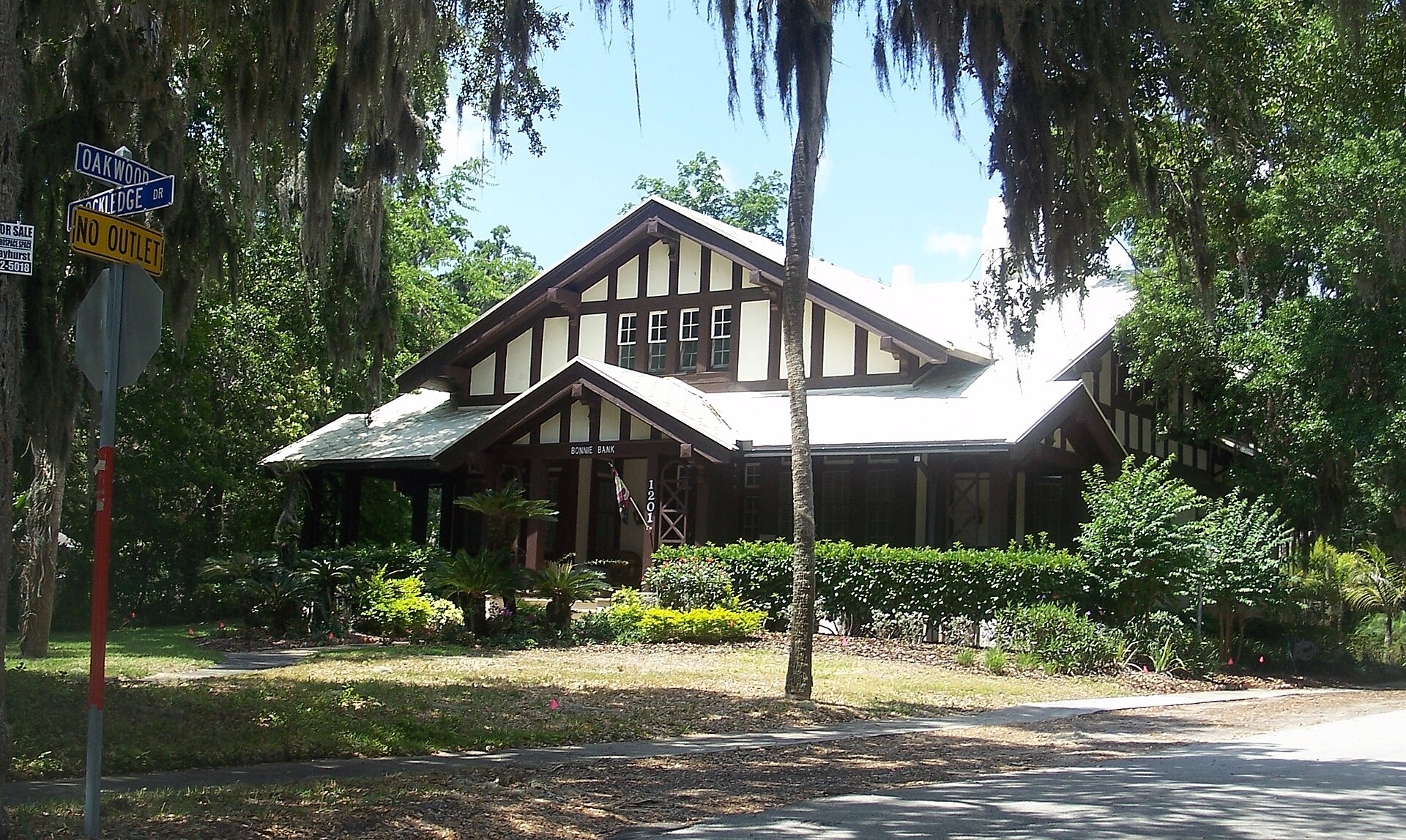
The Magruder-Whaley House, 940 Rockledge Drive, was built in the 1890s for Henry Magruder, a Confederate veteran from Virginia who relocated to Rockledge after the Civil War. The house is a two-story Frame Vernacular with a wraparound porch and Colonial Revival classical detailing on the front entry. The Whaley family acquired it in the 1920s and held it through the 1970s. The current owners completed a restoration in the 1990s. The house is privately owned and not open to the public.
The lost houses
A substantial number of the original winter mansions are gone. Demolitions over the mid-20th century, particularly in the 1950s and 1960s, removed approximately a dozen significant structures. The reasons were typical: aging frame construction needed expensive maintenance, mid-century heirs lacked the funds or interest to keep them, lots were valuable for tear-down redevelopment, and there was no historic-district protection before 1990.
Several names recur in the demolition record:
- The Pinney house on the south end of the Drive, built circa 1895, demolished in the 1960s. The lot is now a smaller modern residence.
- The Sherman house, built circa 1900 for a Pittsburgh winter visitor, demolished in 1958.
- The Hubbard house, demolished in the early 1970s, just before the city’s first historic-preservation overlay zoning was adopted.
The Brevard County Property Appraiser maintains demolition permits going back to the 1950s. The Florida Memory Project holds period photographs of several of these lost houses.
What survived
The 1992 NRHP listing covered 100 contributing buildings, which is the share of the original residential building stock that survived to 1990. Many of those have since had additional renovations, some sensitive and some not. The city’s current overlay zoning provides modest protection: it doesn’t prevent renovation, but it does require local design review for demolitions and major exterior changes within the district.
The economic geography
Rockledge’s winter-mansion stock was always smaller than St. Augustine’s or Palm Beach’s. The federal census of 1900 lists roughly 40 households in Rockledge that the enumerator marked as winter residents (with primary residences in other states), suggesting the maximum mansion count was probably in the 30-to-50 range. By 1930, the count was lower. By 1960, it was a handful. By 1992, when the district was listed, perhaps half a dozen houses were still functioning as winter-only residences; the rest had become year-round homes for either wealthy retirees or year-round Rockledge families.
The Hotel Indian River and its smaller competitor hotels absorbed the larger share of seasonal visitors. The mansion class was always a small minority of the winter population, and most of the Gilded Age winter visitors stayed at hotels rather than building their own houses. That’s part of why Rockledge has a substantial NRHP-listed hotel-and-residential district rather than a Newport-Rhode-Island-style enclave of just-mansions.
What’s worth a visit
The H. S. Williams House (Queen Anne, exterior viewable from Rockledge Drive), the Magruder-Whaley House (corner of Rockledge Drive at 940), and the streetscape of Rockledge Drive south of the historic district’s northern boundary all give a clear sense of what the winter-mansion era looked like. The City of Rockledge publishes a self-guided walking tour. The Brevard Museum of History and Natural Science (Cocoa) has a small Rockledge residential collection.
The Northeastern capital that built the mansions
The wealth that built the Rockledge winter mansions came from specific Northern industries that boomed between the Civil War and the 1893 panic. Pittsburgh steel, Ohio oil refining, Indiana glass manufacturing, New York banking, and Pennsylvania coal all produced families with the disposable capital required to maintain a second residence a thousand miles from their primary home. Florida’s Atlantic coast destinations were favored over Gulf coast or California because the New York Central, Pennsylvania, and Atlantic Coast Line rail systems gave east-coast Florida one-train-change access from northeastern cities. After Henry Flagler’s FEC arrived at Rockledge in 1893, the trip from Manhattan to Rockledge took roughly 36 hours, comparable to the journey to St. Augustine and much faster than the boat-and-rail option to Palm Beach before 1896.
Census enumeration of Rockledge’s winter residents in 1900 listed primary residences in twelve different states, with Indiana, Ohio, Pennsylvania, and New York supplying the largest contingents. The seasonal population pattern of late-October arrivals and early-April departures held consistent into the 1920s, after which the broader cultural shift away from extended-stay winter residence and toward shorter Florida vacations began to thin the year-after-year returnees.
The Indiana connection and the Travis network
The Travis family wasn’t the only Indiana family in Rockledge’s winter colony. Travis-family papers at the State Library of Florida reference the Pinney family of Indianapolis (who built a substantial residence on the south end of Rockledge Drive, demolished in the 1960s), the Stitt family (Indiana glass manufacturing fortune, year-round residents from the 1920s), and others. The Indiana connection had a structural reason: Indiana newspapers in the 1880s and 1890s published extensive Florida travel and investment coverage, particularly through writers like William Henry Smith of the Indianapolis News. Indianapolis’s wealthy industrial class was unusually well-informed about Florida real estate opportunities relative to comparably wealthy populations in less Florida-focused cities.
The Travis name persists in Brevard County beyond the family residence. S. F. Travis Hardware Company, founded in Cocoa in 1885, operates continuously to the present (verified open as of 2023) as the longest-running retail operation in Brevard County. Whether the Cocoa Travis hardware family was related to the Indianapolis Travis estate family is a question that hasn’t been definitively settled in the published genealogies; multiple Travis families settled in central Brevard in the 1870s and 1880s and the surname coincidence may or may not reflect actual kinship.
Further Reading
- Flagler: Rockefeller Partner and Florida Baron by Edward N. Akin
- Florida: A Short History by Michael Gannon
- A Land Remembered by Patrick D. Smith
Sources
- National Register of Historic Places nomination, “Rockledge Drive Residential Historic District” (NRHP #92001045), 1990, npgallery.nps.gov
- Florida Memory Project, Rockledge photographic file, floridamemory.com
- Brevard County Property Appraiser, parcel records and demolition permits, 1950-present
- U.S. Federal Census enumerations, Rockledge precinct, 1900-1940, archives.gov/research/census
- Brevard County Historical Society, Rockledge residential file (Cocoa)
As an Amazon Associate we earn from qualifying purchases.