Florida East Coast Railway reached Rockledge on July 25, 1893
The FEC, then the Jacksonville, St. Augustine & Indian River Railway under Henry Flagler, opened its Rockledge station on July 25, 1893. The arrival killed the Indian River steamboat passenger trade within two years.
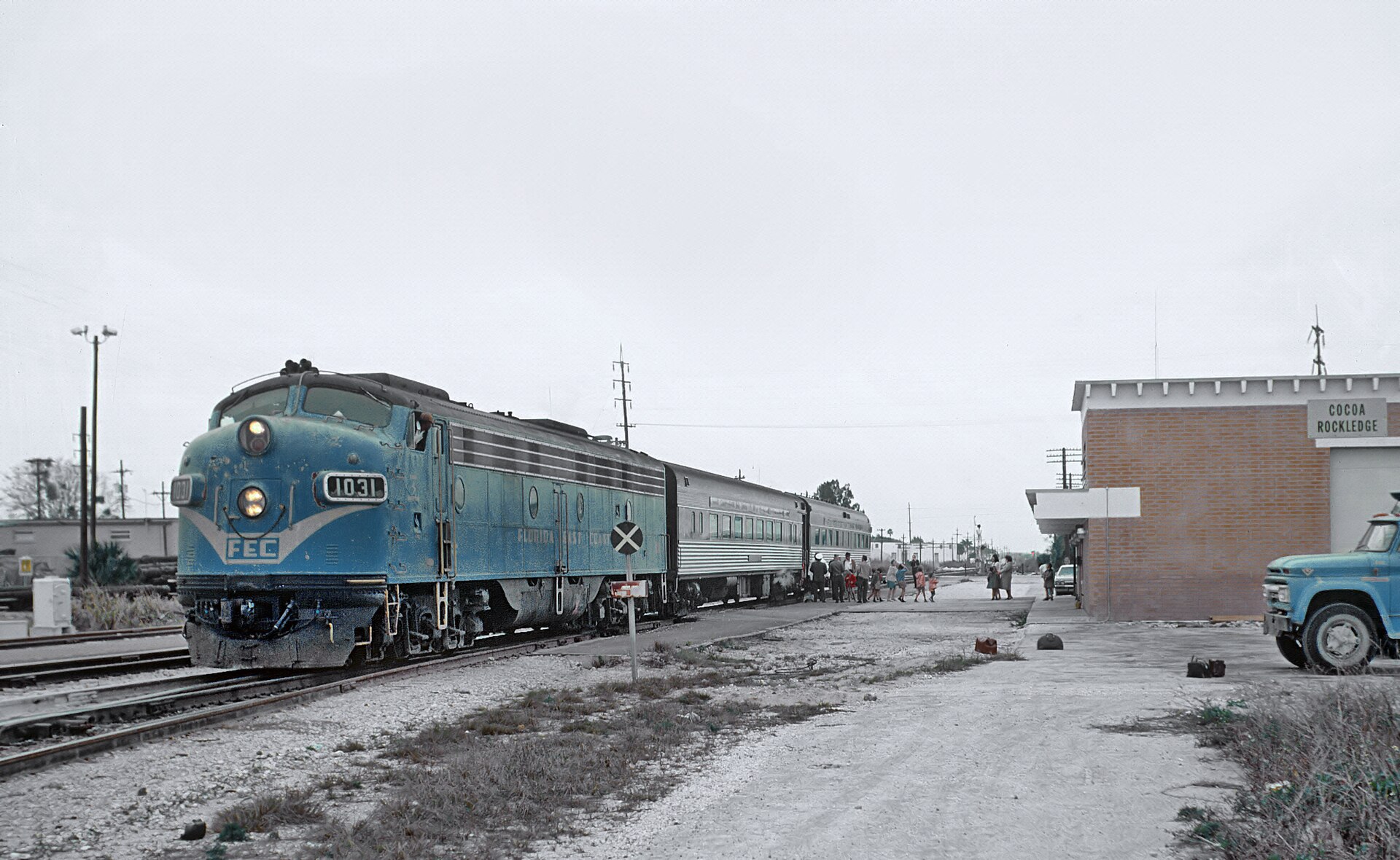
The Florida East Coast Railway reached Rockledge on July 25, 1893. The first train pulled into the new wooden depot, just west of what’s now U.S. 1 at Barton Avenue, mid-morning. A small celebration met it. Within two years, the steamboat passenger traffic from Titusville that had defined Rockledge’s first decade was gone, replaced by direct rail from Jacksonville and through-connections from New York. Rockledge had become a railway town.
The railway in 1893
In 1893, the line was still officially the Jacksonville, St. Augustine & Indian River Railway, the predecessor name of the Florida East Coast Railway. Henry Flagler had acquired the original Jacksonville, St. Augustine & Halifax River Railway in 1885 and was extending it south in segments. The 1893 segment ran from Daytona to Rockledge, opening for service in late July. The line would continue south to Eau Gallie and Melbourne later that same year, then in 1894 to Fort Pierce, and eventually all the way to Key West (completed January 22, 1912; destroyed by the Labor Day Hurricane September 2, 1935).
The FEC reorganized under its current name in 1895. The Rockledge station, built in 1893, was a small wooden frame structure of standard FEC plan: a single-story building with a covered platform, a freight room, a small waiting room, a telegraph office, and the station agent’s office. Period photographs survive at Florida Memory.
Why this killed the steamboats
Before July 1893, reaching Rockledge from anywhere north required a steamboat connection at Titusville. After July 1893, you stayed on the train through Titusville and got off at Rockledge directly. Faster, cheaper (no transfer), reliable in any weather, and through-ticketed from New York and Boston via the Atlantic Coast Line and Pennsylvania Railroad partnerships.
The Indian River Steamboat Company and its smaller competitors lost their core business in months. By 1895, scheduled passenger service south of Titusville was effectively over. A few boats kept running as freight haulers (citrus out, supplies in) but the passenger fleet was retired, sold, or moved to other Florida rivers.
The Rockledge depot under FEC
The depot served Rockledge as the FEC system grew. Daily passenger service ran multiple trains in each direction. Through-cars from New York City brought winter visitors. The Rockledge station handled mail, freight, and passenger traffic for both Rockledge and (until Cocoa got its own station the following year) Cocoa.
The Hotel Indian River sent its wagon to the depot to meet arriving guests. So did the Plaza Hotel, the Travelers Hotel, the New Rockledge Hotel, and the smaller inns and boarding houses that lined Riverside Drive. By 1900, Rockledge had a winter-season population several times its year-round resident count, supported almost entirely by FEC passenger arrivals.
Citrus shipping
The FEC’s freight side was at least as economically important to Rockledge as passenger service. Rockledge was a major citrus shipper from the 1880s through the 1894-95 freeze, and the FEC made it cheaper and faster to ship oranges north. A boxcar of Indian River oranges could leave Rockledge on Wednesday and reach Philadelphia or New York markets by the weekend.
The freeze ended Rockledge’s citrus dominance, but the rail line continued to serve Indian River citrus into the 20th century. Recovery groves eventually replanted, particularly south of Rockledge (around Eau Gallie and Melbourne) where the freeze damage was less complete. By 1910, Indian River oranges were again a major FEC freight category, just shipped from different stations.
Decline of passenger service
Passenger service on the FEC peaked around 1925, declined through the Depression, partially recovered with World War II troop trains and Mainline streamliners (the Henry M. Flagler, the East Coast Champion), and then declined steadily through the 1950s as air travel and the Interstate Highway System captured the long-distance market.
The FEC stopped passenger service entirely in 1968, the same year the Hotel Indian River was demolished. The Rockledge depot, by then nearly 75 years old, had no passenger function. It continued as a freight stop for several more years.
The depot today
The original 1893 wooden depot was demolished sometime in the 1970s after the FEC consolidated freight operations and the building became redundant. Period photographs at Florida Memory and the State Library of Florida document the structure. The site where it stood, just west of U.S. 1 between Barton Avenue and Orange Avenue, is now a small commercial parcel.
The FEC main line still runs through Rockledge as active freight track. Brightline opened its Miami-to-Orlando higher-speed passenger service on September 22, 2023, using the FEC right-of-way from Cocoa northward. Brightline doesn’t currently stop at Rockledge or at Cocoa, though Brightline announced a planned Cocoa infill station in March 2024 with service projected to begin around 2029. Until that opens, Rockledge sits in its 19th-century arrangement: the trains pass through at speed, the passenger stop is elsewhere.
What we can verify
The 1893 opening date is documented in FEC corporate records (the FEC Railway archive, now at the University of Florida’s Smathers Libraries Special and Area Studies Collections), in Florida Star contemporary coverage, and in Seth Bramson’s standard history Speedway to Sunshine. The exact date varies slightly across sources between July 25 and July 27, the corporate “opened for service” date is July 25, with the first regular scheduled train running July 27. Sources that give one date or the other are both citing the same set of records, just choosing different markers.
The Flagler arc and Rockledge’s place in it
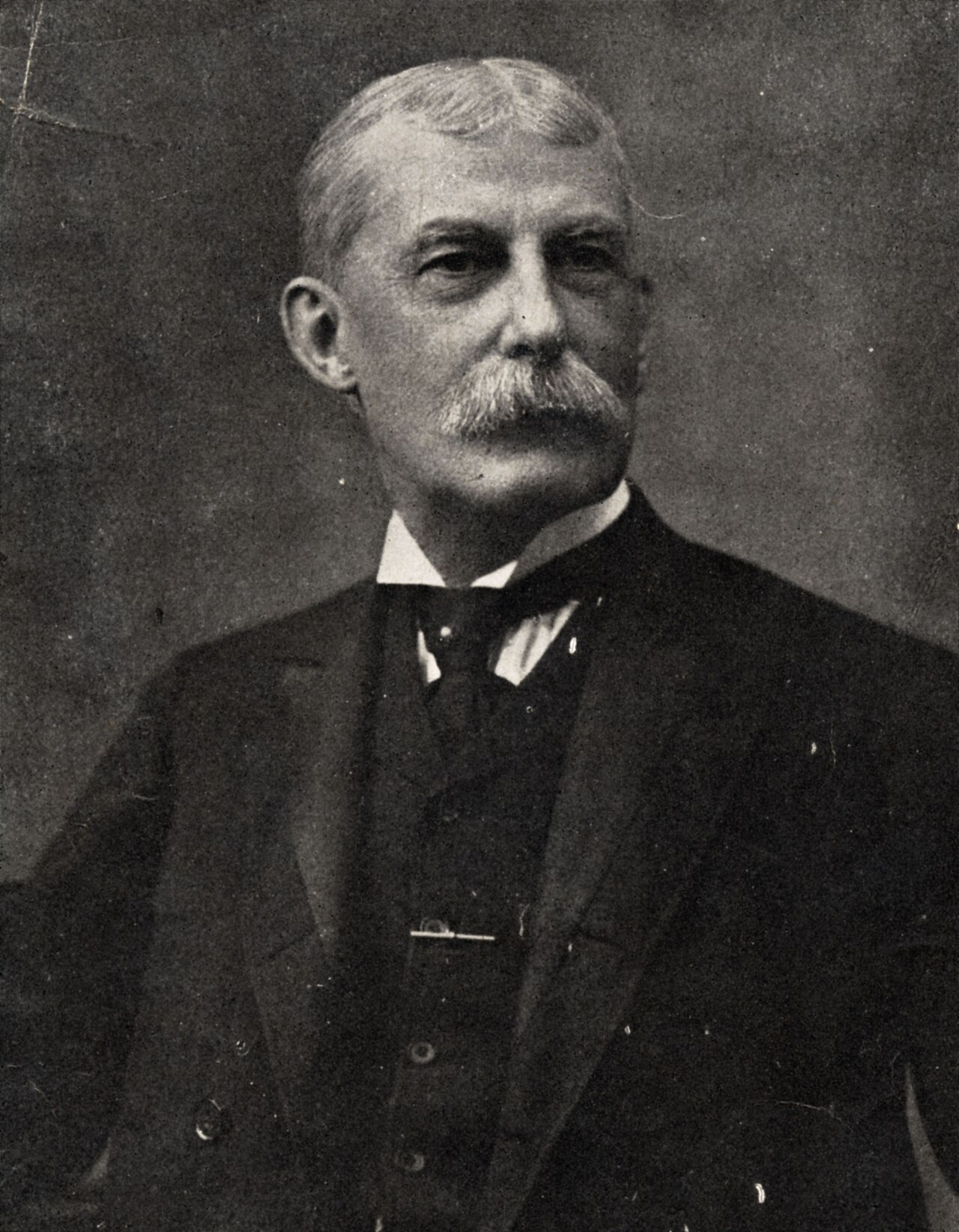
Henry Morrison Flagler (born January 2, 1830, in Hopewell, New York; died May 20, 1913, in Palm Beach) was already wealthy from Standard Oil when he turned to Florida hotel and railroad development in 1885. The Rockledge depot in 1893 sat in the middle of his system geographically and chronologically: south of his Ponce de Leon Hotel at St. Augustine (opened January 10, 1888), north of the Royal Poinciana at Palm Beach (completed 1894), and three years before the railroad reached Miami (April 15, 1896). The 1893 Rockledge segment was part of the southward push Flagler accelerated after the 1894-95 Great Freeze pushed Florida agriculture and tourism investment south to warmer latitudes. By the time he completed the Overseas Extension to Key West on January 22, 1912, the network ran 522 miles and was the longest railroad on a single trestle-and-causeway corridor in the world. Rockledge sat at mile post 187 from Jacksonville.
Flagler’s death in May 1913 came just sixteen months after the Key West extension opened. The FEC reorganized under his son Harry Harkness Flagler and a board of trustees, continued through the 1920s land boom, suffered the loss of the Overseas Extension in the Labor Day Hurricane on September 2, 1935, declared bankruptcy in 1931, was reorganized in 1961, and emerged as a freight-focused regional railroad after the 1968 passenger service termination. Rockledge sat through every phase as a stop on the line until it didn’t anymore.
Sources
- Seth H. Bramson, Speedway to Sunshine: The Story of the Florida East Coast Railway (Boston Mills Press, multiple editions 1984-2014)
- Florida East Coast Railway corporate records, University of Florida Smathers Libraries, ufdc.ufl.edu
- Florida East Coast Railway timetables, 1893-1920, Florida Memory Project, floridamemory.com
- The Florida Star (Titusville), July 1893 coverage of FEC opening, Chronicling America, chroniclingamerica.loc.gov
Further Reading
As an Amazon Associate we earn from qualifying purchases.